
For manufacturers, suppliers, and other businesses that rely on plastic bulk containers, damaged packaging often leads to one simple—but critical—question: repair or replace?
When customers come to us with this question, they usually have two things top of mind: keeping costs down and keeping operations moving. They’re concerned about the expense of replacement, but also about potential downtime during repairs—and figuring out which option makes the most sense can feel like a difficult balancing act.
At Michigan Industrial Container, we help tip the scales in your favor—thoroughly inspecting your containers and evaluating your options to help you decide the best path forward.
In this article, we’re breaking down exactly how we make that decision. Follow along to learn what we look for and what it means for your bottom line.
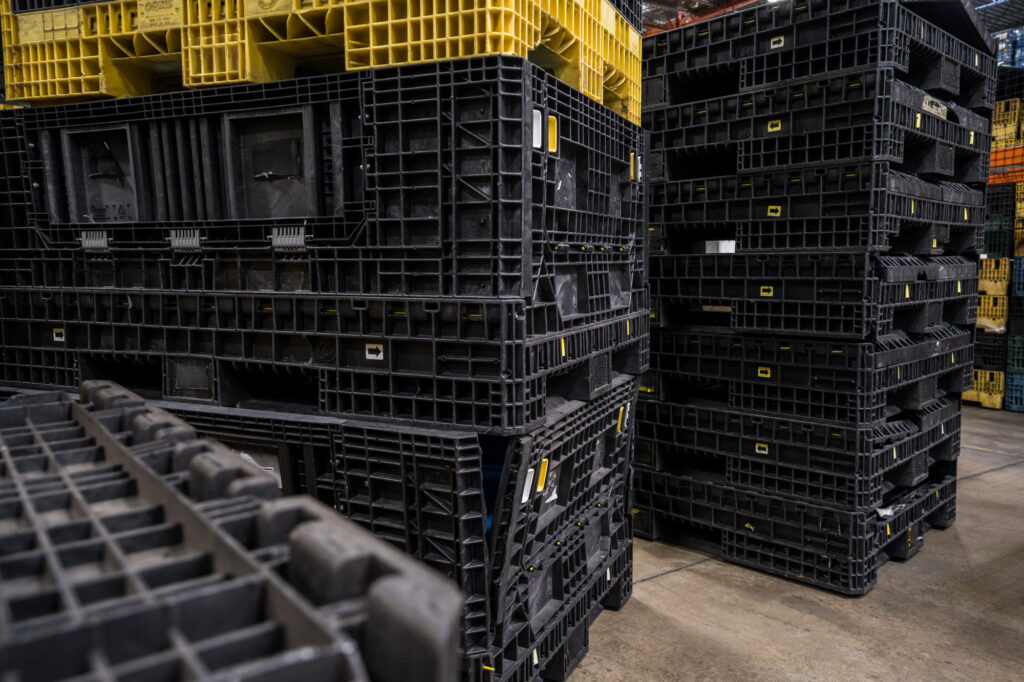
Our Container Inspection Process, Step by Step
1. Establish Your Container Standards
When someone comes to us with 50 broken knockdowns, the first thing we need to do is establish what exactly those containers need to no longer be considered “broken”—because every business has different standards.
For example, customers whose containers move through assembly lines may require all original components, because replacement runners can interfere with their equipment. Even one missing runner can take a container out of service.
On the flip side, some businesses can accept certain runners missing because of how they handle their containers. An operation that doesn’t tip its bins, for example, may not require every runner to be intact under its safety standards.
If your company doesn’t have a set standard for your bulk containers, we’ll take the time to work it out with you before we quote our services. Skipping this step could lead to an unnecessary repair or the scrapping of something that’s still usable, so we make sure to avoid those costly mistakes through clear communication with our customers.
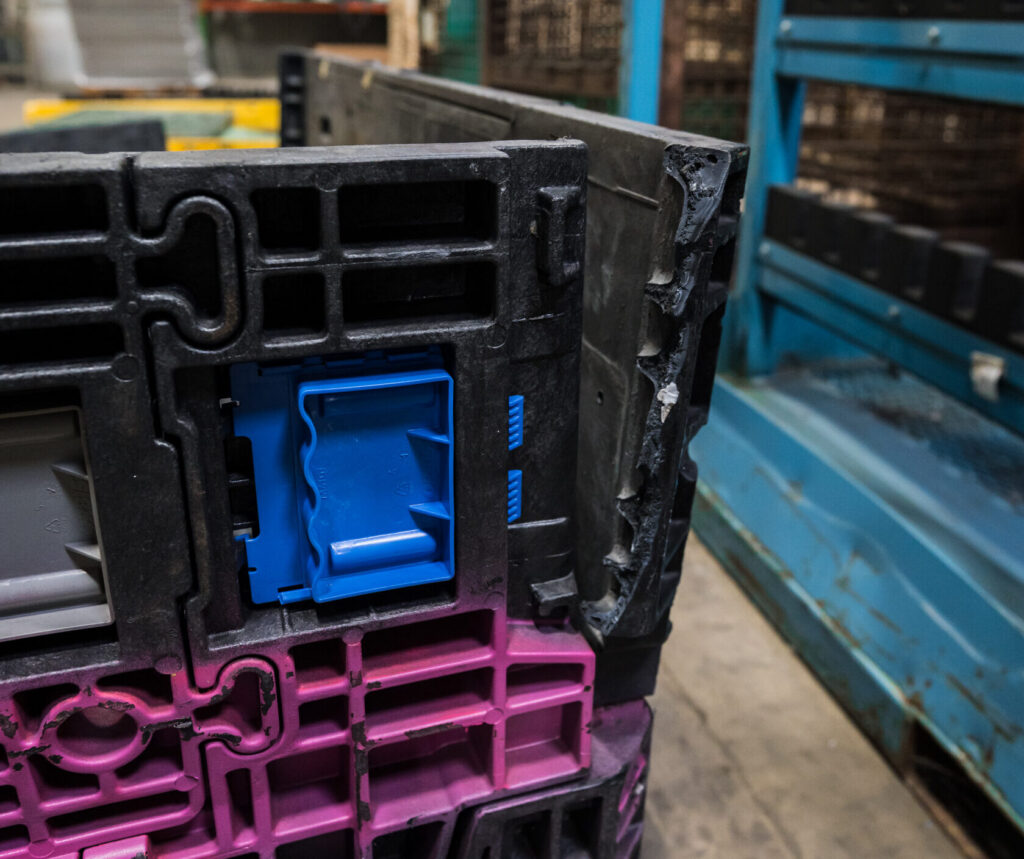
2. Inspect Doors, Handles, and Latches
With your standards established, we can begin the inspection process to see where your containers are currently falling short. Our team has a checklist that we work through for every container we inspect.
From our experience, the most common types of damage are broken doors and latches, so that’s where we start. We look for doors that won’t open or close properly, damaged handles, and latches that no longer hold. We also check for fiberglass rods that have come loose or are no longer properly clipped in place.
And we don’t just look at these parts—we put them through the motions. Some doors may look fine on the surface but won’t open properly because improper stacking has pushed them in or warped them. Actually opening, closing, and testing these components helps us catch problems that a quick once-over could miss.
3. Inspect the Base
Moving down our checklist, we next inspect the base of each container—checking to see if all fork pockets are intact and that everything can stack properly. We also look for cracks or breaks in the hinges where the doors attach to the base, since damage there can keep the doors from opening or closing properly.
The thoroughness of this inspection is important because, in our experience, base damage is the most likely type of damage to render a container unrepairable—a topic we’ll cover in the section immediately after these steps. So, getting this part right goes a long way toward making sure we give you the right recommendation on whether to repair or replace your containers.
4. Give You a Recommendation and Quote
Using what we learned during our inspection and comparing it against your safety standards, we’ll have enough information to know whether repairing or replacing is the best route for you.
Often, our recommendation is to repair due to the sizable cost benefits (more on this in the cost section below), but we’ll still walk you through our findings and explain our recommendation in detail to make sure we’re on the same page.
Once we are, we’ll give you a quote for the work. Along with the repair costs, that quote will typically include the scrap value of containers we can’t repair—giving you an opportunity to lower your invoice or get money back to invest in replacement containers.
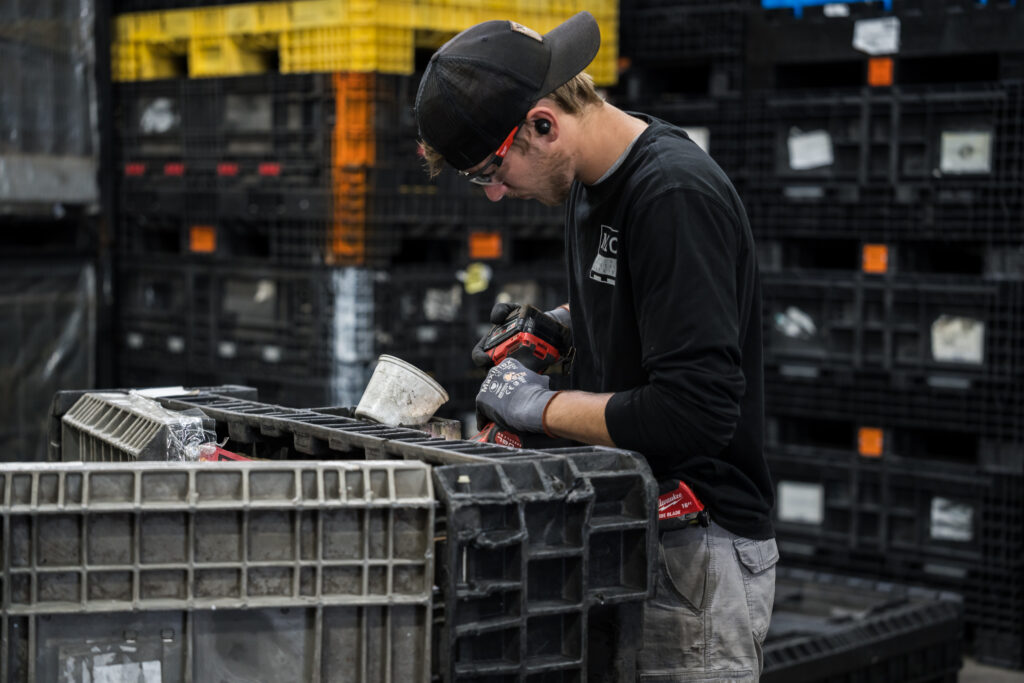
5. Inspect Again and Begin Container Repairs
If we’re given the go-ahead to move forward with repairs, we’ll complete an additional inspection beforehand. On the off chance we missed anything during our initial inspection, this gives us another chance to catch it, helping you avoid any unwelcome surprises down the road.
Then, using the standards we established with you at the beginning, we create a work order that clearly lays out the repairs that need to be made. This work order will clearly note any special requirements or exceptions you may have—for example, if your standards call for only one good runner per side of the container, our team will be made well aware. We then send this work order to our shop floor, where the repair process can begin.
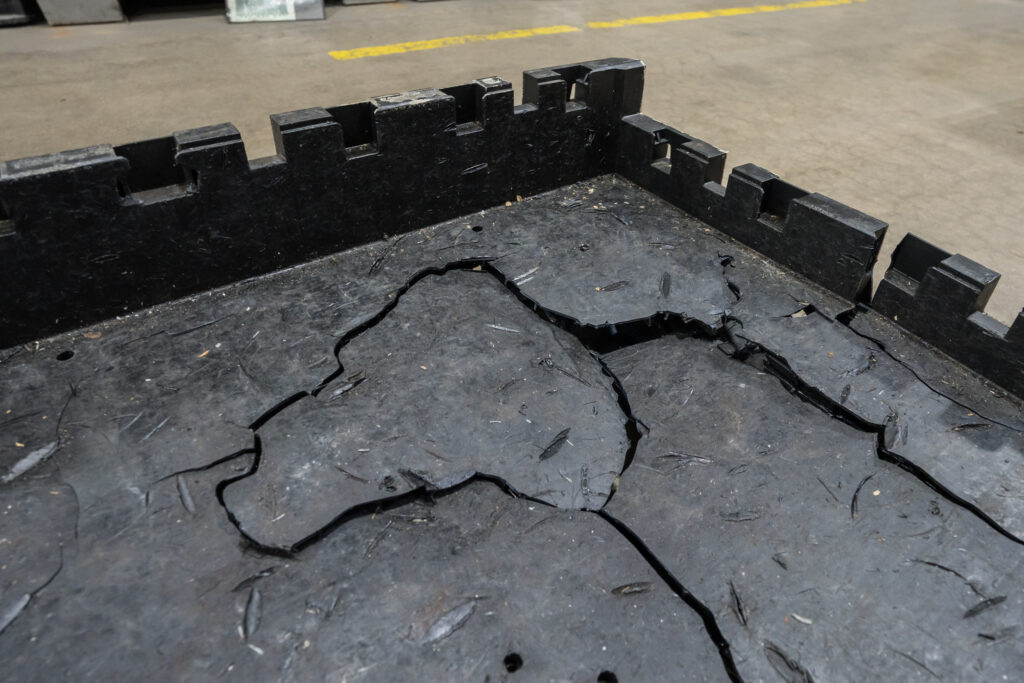
What are the Signs a Container Can’t Be Repaired?
During our inspection process, we’re always on the lookout for telltale signs that a container is unable to be repaired. As we mentioned earlier, our experience tells us that this often comes down to base damage.
A damaged base can spell trouble in numerous ways. From an operations standpoint, a damaged base can mean the doors won’t open or close the way they should, making the container difficult to use and slowing down your workflow. From a safety standpoint, a damaged base can prevent containers from stacking securely, allowing them to slide around, creating hazards for your team.
This is why, regardless of your safety standards, we’ll be more likely to recommend a replacement if we find significant base damage, as opposed to more easily repairable damage such as broken doors, latches, and handles.
Evaluating the Cost of Repairing vs. Replacing Your Bulk Containers
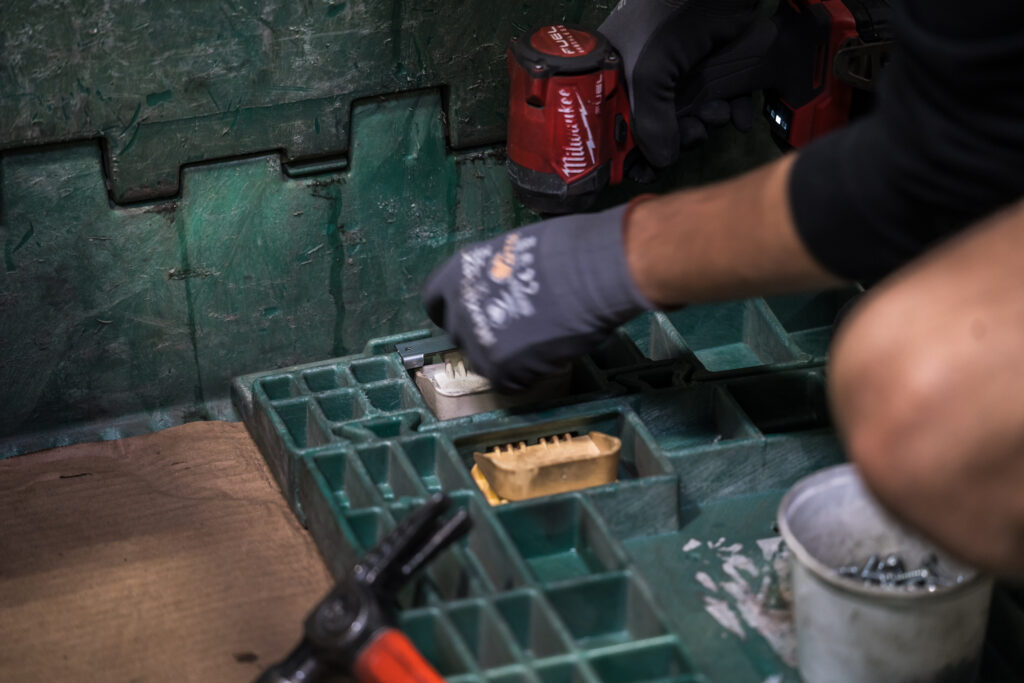
As we mentioned earlier, however, we’ll most often recommend repairing, and the reasoning behind that is simple: typically, you can get roughly four repairs for the cost of one replacement plastic bulk container.
Repairs allow you to keep using the same containers over multiple rounds of damage, and those savings add up considerably. If we can repair a container to your standards and get it back into service, we’d much rather do that than have you pay to replace it.
And because saving you money is a priority for us, even when a container can’t be repaired, we work to recover as much value for you as possible. We’ll strip off the good parts to use in other repairs, then recycle the broken material. That scrap is weighed, and you receive a rebate based on the pounds recycled—which you can put toward replacement containers or use to lower your invoice. So, even a scrapped container isn’t a complete loss.
Overall, we’ll always look for opportunities to repair before recommending replacement, because it’s usually the most cost-effective option. But if we find damage that indicates repair isn’t your best option, we’ll be upfront about that, too. It’s all about finding the best solution for you.
Related reading: Meet Your Sustainability Goals with Container Repair and Recycling
Make the Right Call: Partner with Michigan Industrial Container
Overall, there are a lot of factors that go into deciding whether to repair or replace your containers.
When you partner with Michigan Industrial Container, you’ll get a recommendation based on a detailed inspection and backed by an expert team with years of experience. And with our transparent process and clear communication, you’ll know exactly how we reached our conclusion and why we believe it’s the best path forward for your business.
So, if you’re weighing whether to repair or replace your containers, there’s only one call you really need to make: one to Michigan Industrial Container.
Give us a call today: (616) 916-3180